
Three Things I Brought Back From Germany
Thinking beyond the kitchen
Nick McNally, Founder
We go to Germany every year expecting to see something new.
Some years there’s a lot of noise around things that, in reality, I don’t think we’ll ever use. Then there are the things you see and immediately start thinking about which projects they could work on.
This year there were three of those.
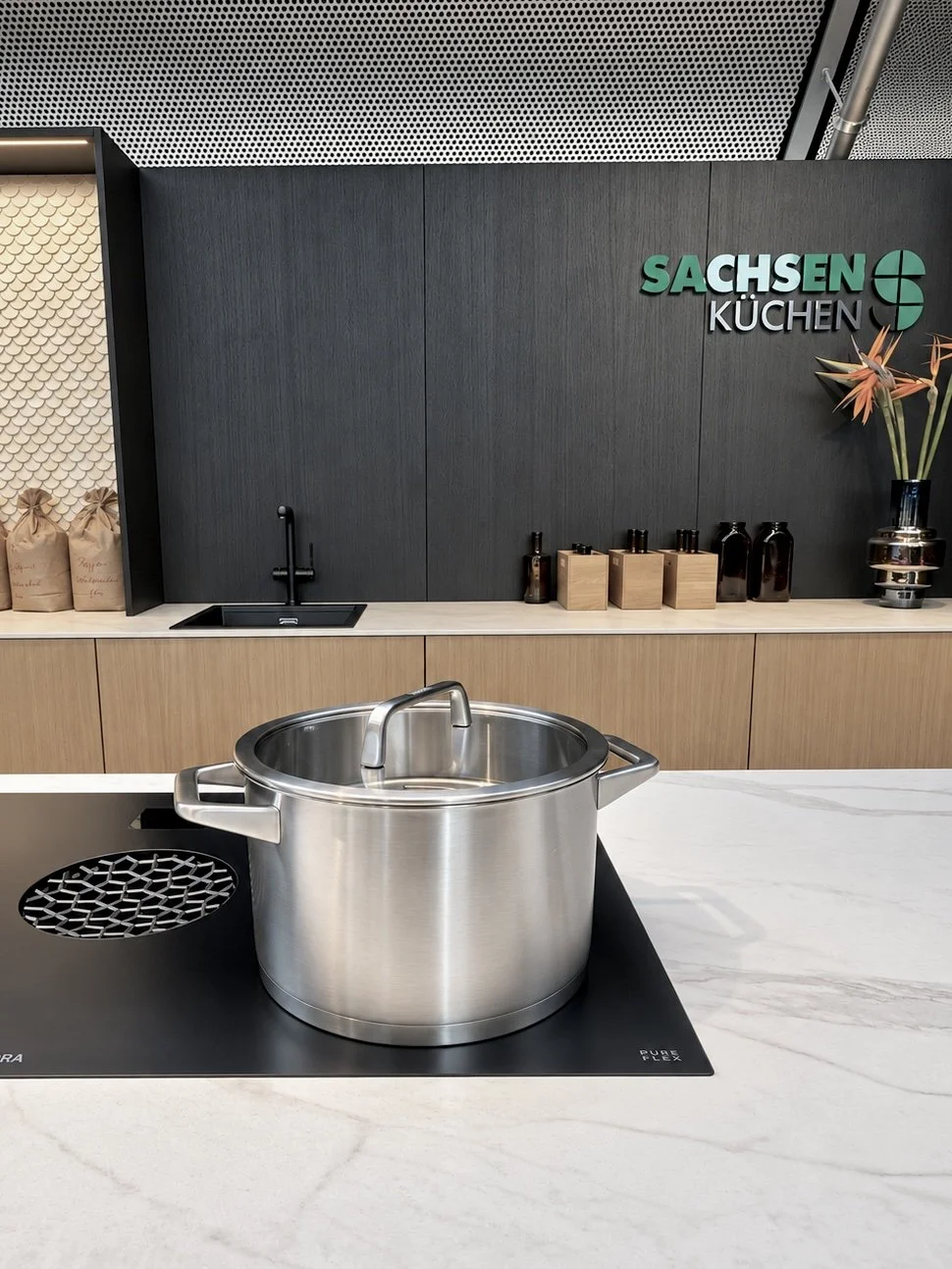
We spent a few days between BORA in Herford and Sachsenküchen in Löhne as part of Hausmesse. These trips are always valuable, not just to see what’s new, but to spend time with the people behind the products and get a better understanding of where kitchen design is heading next.
There’s also a big difference between seeing a new product online and actually getting your hands on it, understanding the detail and seeing how it works at full scale.
There was plenty to see this year, but these are the three things I came back to Edinburgh still thinking about - and that I think we’ll genuinely use.
1. Softer kitchens
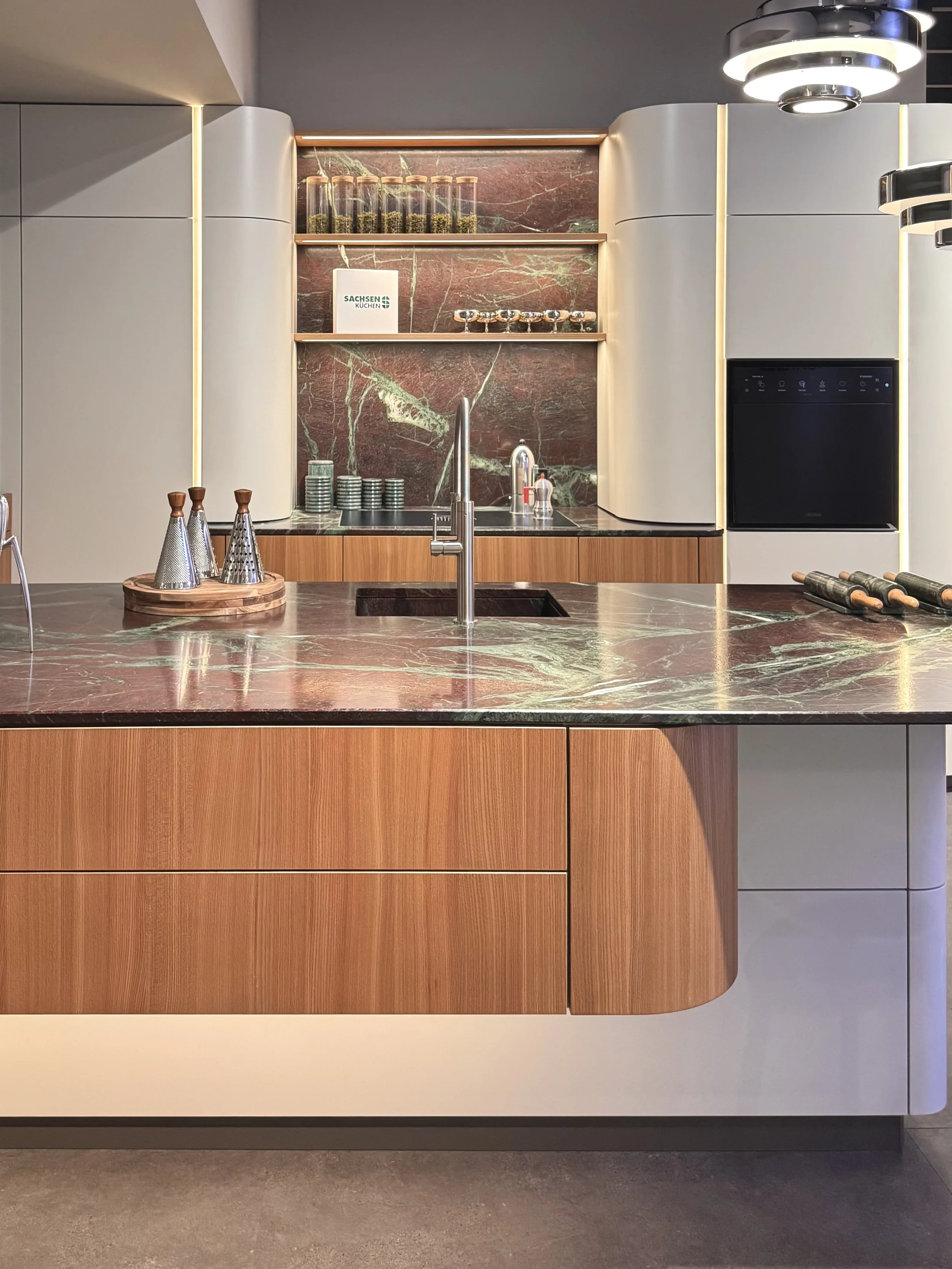
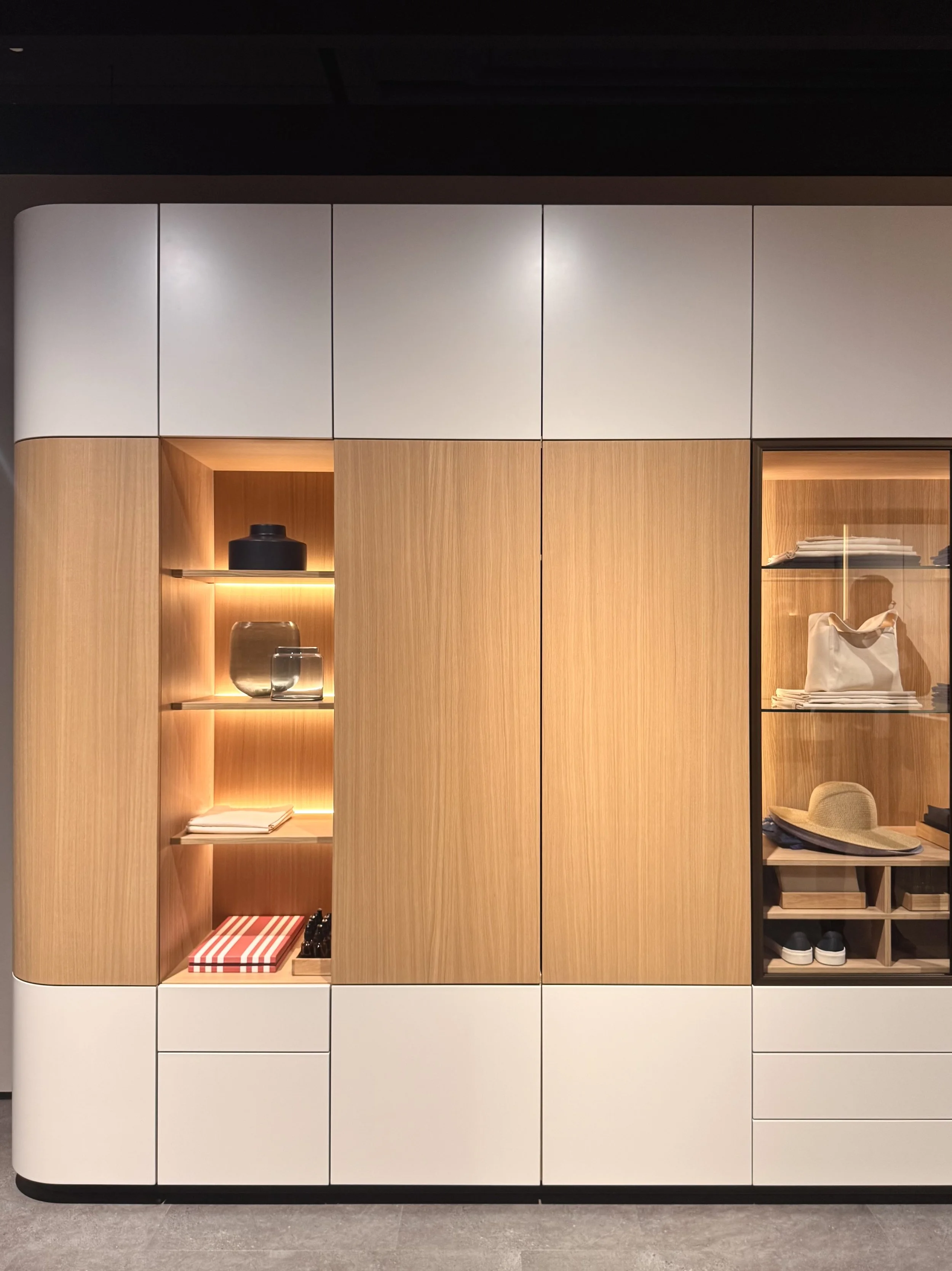
Sachsenküchen’s new SoftArc concept was probably the biggest shift for me.
We’ve spent years designing kitchens around straight lines. Islands are square, tall banks finish square and panels meet at 90 degrees. That’s not suddenly going to disappear, but it was interesting to see Sachsenküchen properly explore something different.
SoftArc introduces curved cabinetry and softer panel details that take some of those harder edges away.
I really liked it, particularly as kitchens are becoming less defined as separate spaces. We’re designing more furniture that continues into living areas, dining spaces, pantries and other parts of the home.
Our new Japandi-inspired display in Edinburgh is a good example, with walnut cabinetry continuing into the living space and even a passage door hidden within it.
SoftArc feels like another progression of that idea.
I don't think we'll suddenly start putting curves everywhere, but used in the right place - at the end of an island or where cabinetry meets another part of a room - I think it could be really good.
It gives us something else to play with.
2. BORA's dishwasher
This was probably the product that created the most conversation on the trip.
BORA entered the kitchen market and completely changed how people thought about extraction. They’ve since moved into refrigeration, freezing and other areas of the kitchen.
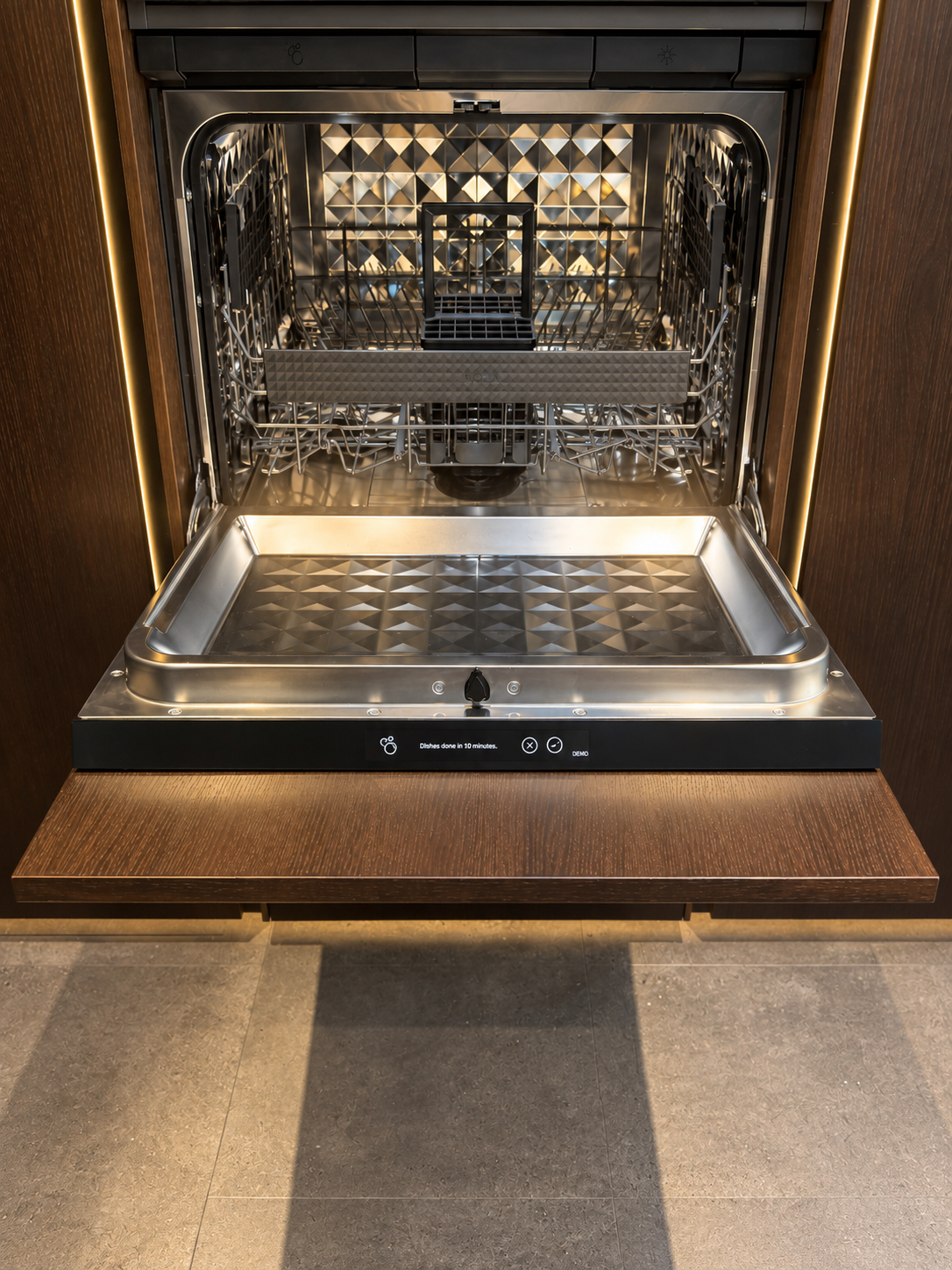
Now they’ve taken on the dishwasher.
The headline feature for me was the ability to clean and dry a load in around 10 minutes. That potentially changes how you use a dishwasher, particularly when entertaining and being able to turn around glasses, plates and dishes quickly.
I’m always slightly sceptical of new kitchen technology until I can see what problem it actually solves. There are plenty of features that sound brilliant in a brochure and probably get used twice.
This felt different.
Seeing it demonstrated properly in Herford was impressive. BORA disrupted extraction - it’ll be interesting to see what they can do with dishwashing.
3. The Shaker isn't going anywhere
This one was much less dramatic, but probably just as relevant to the kitchens we actually design.
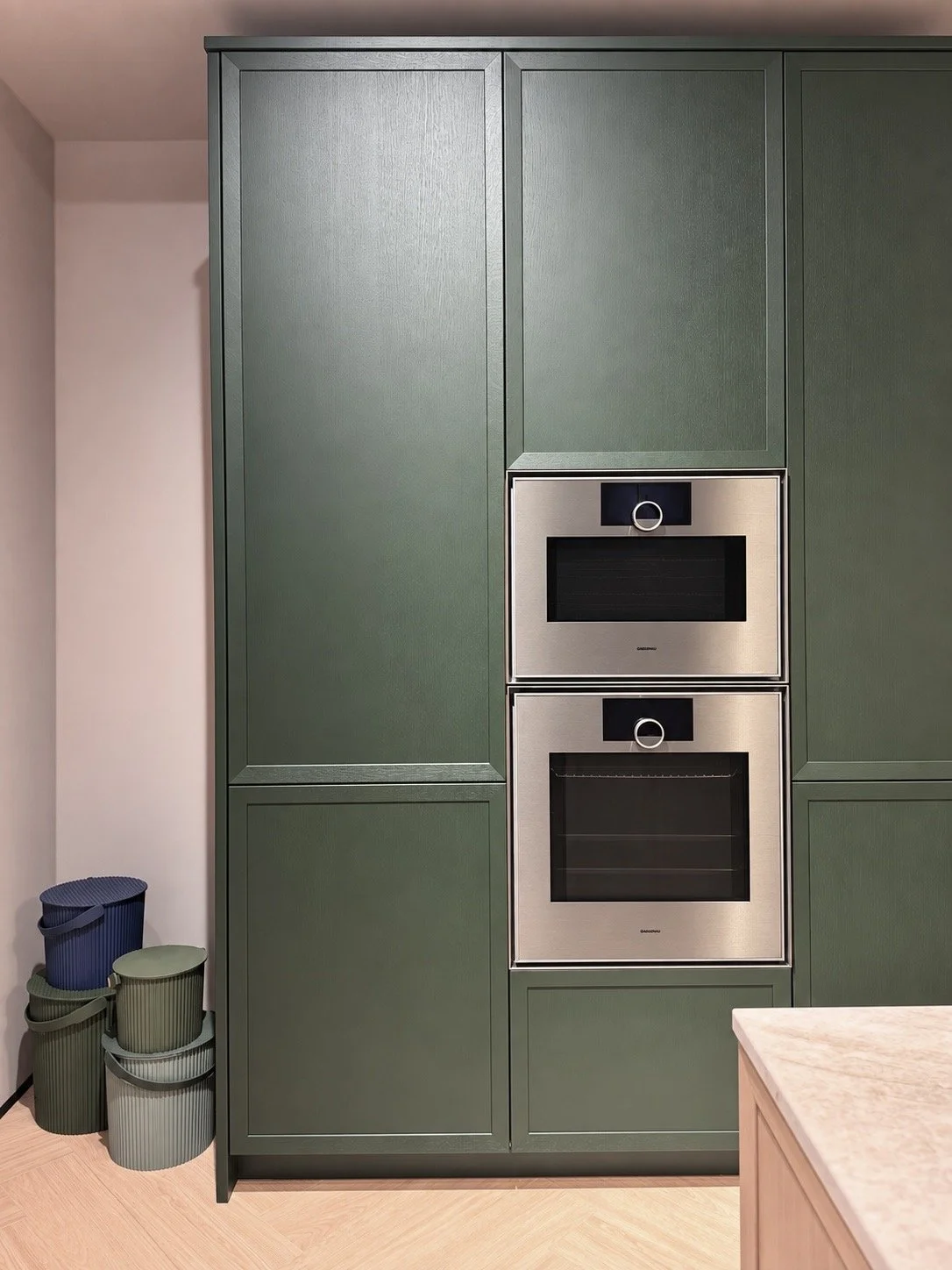
Sachsenküchen showed a new slim, bevelled Shaker door and the proportions are really good.
Shaker kitchens have been around forever and probably always will. Traditional versions can sometimes feel a little too heavy for a contemporary house, while a completely flat slab door can go too far the other way.
This sits somewhere in between.
The slimmer frame and bevelled detail make it feel much sharper than a conventional Shaker. It’s also available across different woods, stains and lacquered finishes, which opens up plenty of combinations.
I can see us using this.
We’re doing more projects where clients want natural materials and some detail in the cabinetry, while still keeping the overall kitchen clean and architectural.
Sometimes the quieter launches end up being the most useful.
The bigger takeaway
The biggest thing I took from Germany wasn't actually a particular product.
It was how much the lines between kitchens, furniture and interiors are continuing to disappear.
We've been moving this way for a while. Kitchens are increasingly part of much bigger open-plan spaces and, particularly on the architect-led projects we work on, you can't design the kitchen in isolation.
The materials have to work with the architecture. The furniture has to work beyond the kitchen. Appliances need to do more without necessarily becoming more visible. Increasingly, it’s about how the whole space works together.
A lot of what we saw in Germany felt like another step in that direction.
It’s also why these trips are important. You can look at products online, but it’s completely different seeing them full-size, looking at the construction and speaking directly to the people behind them.
We came back with samples, photos and plenty of ideas, but more importantly, thinking about where we can actually use them.
That's the bit that matters.
Kitchens By Nick McNally designs bespoke kitchens and fitted furniture from our studio in Edinburgh, working with homeowners, architects, interior designers, contractors and developers across Edinburgh and Scotland.
If you're planning a project, you're always welcome to come into the studio, see what we're working on and talk through some ideas.
